
Benefits of PaaS – A Solution for Innovation and Cost Optimization for Businesses
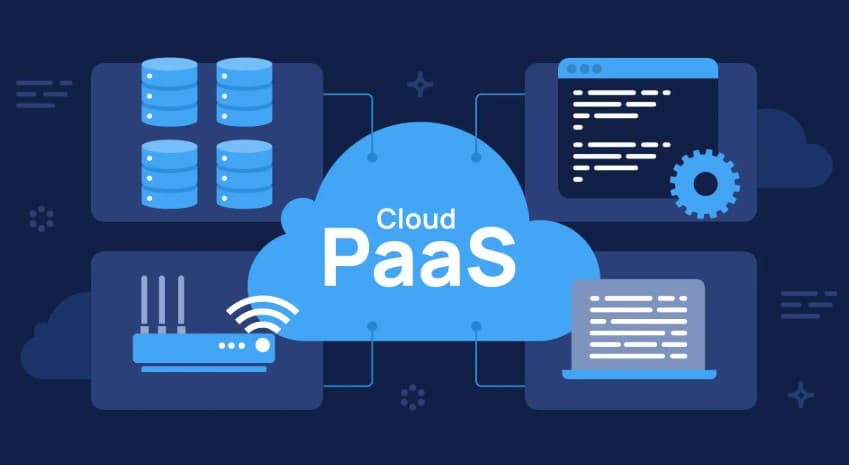
In today’s increasingly competitive business environment, alongside the core element of human resources, technology is also regarded as an indispensable tool for businesses. Among various technological solutions, Platform as a Service (PaaS) has emerged as a groundbreaking option. In this article, Topgroup will guide you through what PaaS is, why businesses should adopt it, and the benefits it brings.

What is PaaS?
PaaS, or Platform as a Service, is a cloud service model that provides an integrated platform, enabling businesses and developers to easily develop, deploy, and manage applications with minimal complexity.
Instead of worrying about server infrastructure, operating systems, or complex and costly software tools, PaaS offers everything in a centralized environment.
With PaaS, developers can:
- Accelerate application development using pre-integrated tools and resources.
- Optimize costs and effort by eliminating the need to manage infrastructure or maintain systems manually.
Why Should Businesses Choose PaaS?

In the past, developing any application required significant investment in hardware, software, and human resources to build a system from the ground up. This process was not only expensive but also prone to risks such as security vulnerabilities, prolonged deployment timelines, and operational issues. Applications could also face unforeseen errors and insufficient resources or budgets for maintenance.
PaaS addresses these challenges by offering:
- A standardized development environment: Businesses no longer need to set up infrastructure or worry about upgrades and security.
- Increased flexibility: Supports multiple platforms, including web, mobile, and desktop applications, catering to diverse development needs.
- Optimized operational costs: Businesses only pay for the resources they actually use (pay-as-you-go).
Key Benefits of PaaS for Businesses
1. Faster Time-to-Market

In the fiercely competitive technology market, speed is critical. PaaS provides development tools such as APIs, code templates, and automated workflows, enabling businesses to rapidly build and test applications compared to traditional methods.
By supporting the entire development lifecycle—from design and testing to deployment—PaaS allows businesses to launch products faster and seize market opportunities. Moreover, its multi-platform capabilities make it easier for businesses to reach both mobile and desktop users seamlessly.
2. Reduced Operational Costs
With PaaS, businesses no longer need to invest in servers, software, or skilled IT teams to manage infrastructure. This significantly reduces expenses compared to traditional application development models.
Additionally, the cloud-based, flexible payment model ensures businesses only pay for what they use, eliminating unnecessary costs. PaaS also mitigates financial risks associated with scaling up operations, making it a cost-effective choice.
3. Flexible Scalability
PaaS imposes no limits on features or usage scale, allowing businesses to expand or adjust applications as needed. This flexibility surpasses traditional infrastructure adjustments, which can be both disruptive and expensive.
By automatically allocating resources based on demand, PaaS ensures stable system performance even during sudden spikes in user activity.
4. Continuous Updates and Security

One of the major challenges of managing in-house systems is ensuring timely updates and robust security measures to maintain application quality and user experience.
With PaaS, the service provider handles all bug fixes, upgrades, and system maintenance. This not only reduces the burden on internal teams but also ensures applications operate on the latest and most secure platforms.
The Future of PaaS in Digital Transformation
In the digital era, businesses are striving to leverage technology to enhance customer experiences and optimize operations. Against this backdrop, PaaS not only eliminates technical barriers but also serves as a catalyst for continuous innovation.
By seamlessly connecting development teams with customers through integrated solutions, PaaS has become the go-to choice for businesses of all sizes—from startups to large corporations—on their digital transformation journey.