
Marketing Automation: Benefits, Applications, and Differences from CRM
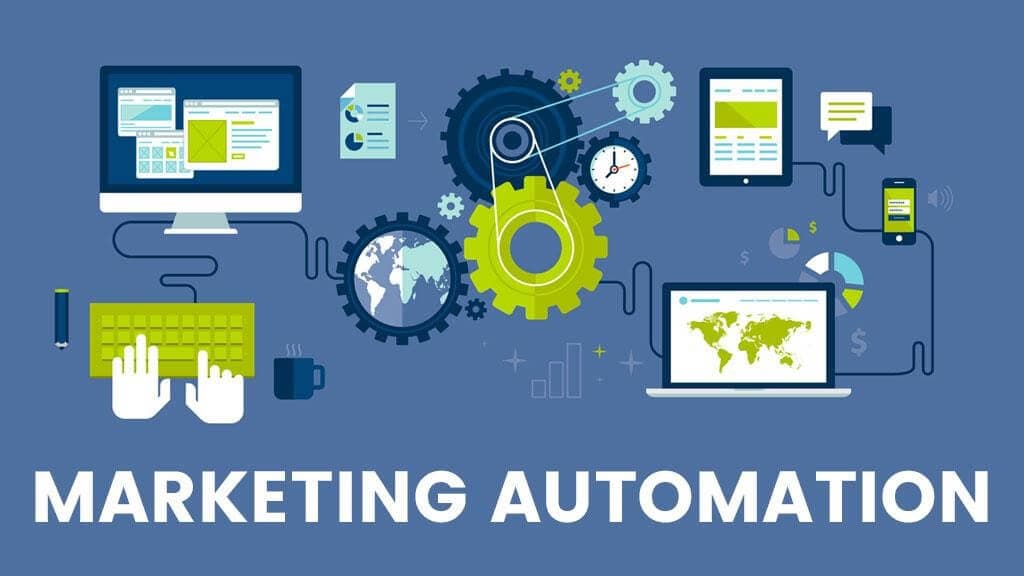
In the context of an increasingly competitive market and ever-complex customer demands, businesses face the challenge of effectively managing marketing campaigns and interacting with customers. To address this issue, marketing automation has emerged as an advanced solution, helping to automate marketing processes, optimize time and resources, and provide insights into customer behavior.

What is Marketing Automation?
Marketing automation is the process of using technology to optimize and automate marketing activities, allowing businesses to manage marketing campaigns effectively from a single platform. This includes managing activities such as email marketing, social media, mobile messaging, and advertising.
Advanced marketing automation technology helps track and analyze visitor behavior, thereby creating personalized multi-channel marketing journeys. By delivering a consistent customer experience, marketing automation improves sales channel efficiency and quickly converts a large number of leads into satisfied customers through precise marketing tactics.
Benefits of Marketing Automation
1. Freeing up time to focus on strategy

Marketing automation reduces the workload of manual and repetitive tasks, allowing marketers to focus on creative strategy. For instance, automating the lead prioritization process enables sales teams to concentrate on developing high-potential leads rather than spending time on administrative tasks.
2. Gaining detailed insights into leads
Marketing automation technology provides deep insights into lead behavior by tracking their interactions with content, messages, ads, and emails. This helps marketers better understand where leads are in the sales funnel, identify which channels and tactics are most effective, and apply these lessons to future marketing campaigns.
3. Customizing Tracking

Another notable feature is the ability to customize lead tracking based on specific behaviors. For example, if a customer is researching a product, the system can determine they are in the early stages of the buying process. If the customer downloads information about a particular product, it may indicate they are ready to receive support from sales staff.
4. Running broader marketing campaigns
Aggregating information from various touchpoints such as website visits, social media interactions, and direct marketing allows for automated scoring and prioritization of leads. This drives more effective marketing campaigns, including:
- Trigger-based marketing messages.
- Drip emails to maintain interest.
- Personalized emails.
- Messages on Facebook or Twitter.
5. Prioritizing leads

This software not only nurtures leads but also enables businesses to establish clear, objective criteria for assessing sales readiness. Accurate analytics help prioritize sales staff's time and measure the effectiveness of interactions with leads.
6. Improving Marketing ROI
Integrating marketing automation with CRM systems allows for more accurate ROI calculations. This eliminates guesswork and provides a clear view of the effectiveness of marketing campaigns.
7. Predicting future investments more accurately
Marketing automation provides closed-loop reporting, helping organizations accurately calculate the cost per opportunity and the ROI of marketing efforts. This is particularly useful for future investment planning, enabling businesses to predict marketing campaigns' profitability better.
What is the Difference Between CRM and Marketing Automation?

CRM and marketing automation both play crucial roles and are often combined to maintain detailed records of customers from initial contact to becoming actual customers.
However, marketing automation primarily focuses on automating tasks to generate and nurture leads on a large scale through various online and offline channels. It handles collecting information about lead preferences and managing marketing campaigns efficiently.
Conversely, CRM focuses on managing and storing customer information, including previous purchase behavior and interactions with the business. CRM provides insights into the customer journey and helps track relationships with current customers.
The integration of CRM and marketing automation offers significant benefits to businesses, allowing for refined campaigns and enhanced marketing effectiveness. Reporting and analytics from both systems provide a comprehensive view, helping to optimize marketing strategies and improve business outcomes.
Share this article
Next post
Programmatic Advertising là gì?