
Easily distinguish between AI Lowcode and AI Nocode - 5 typical examples
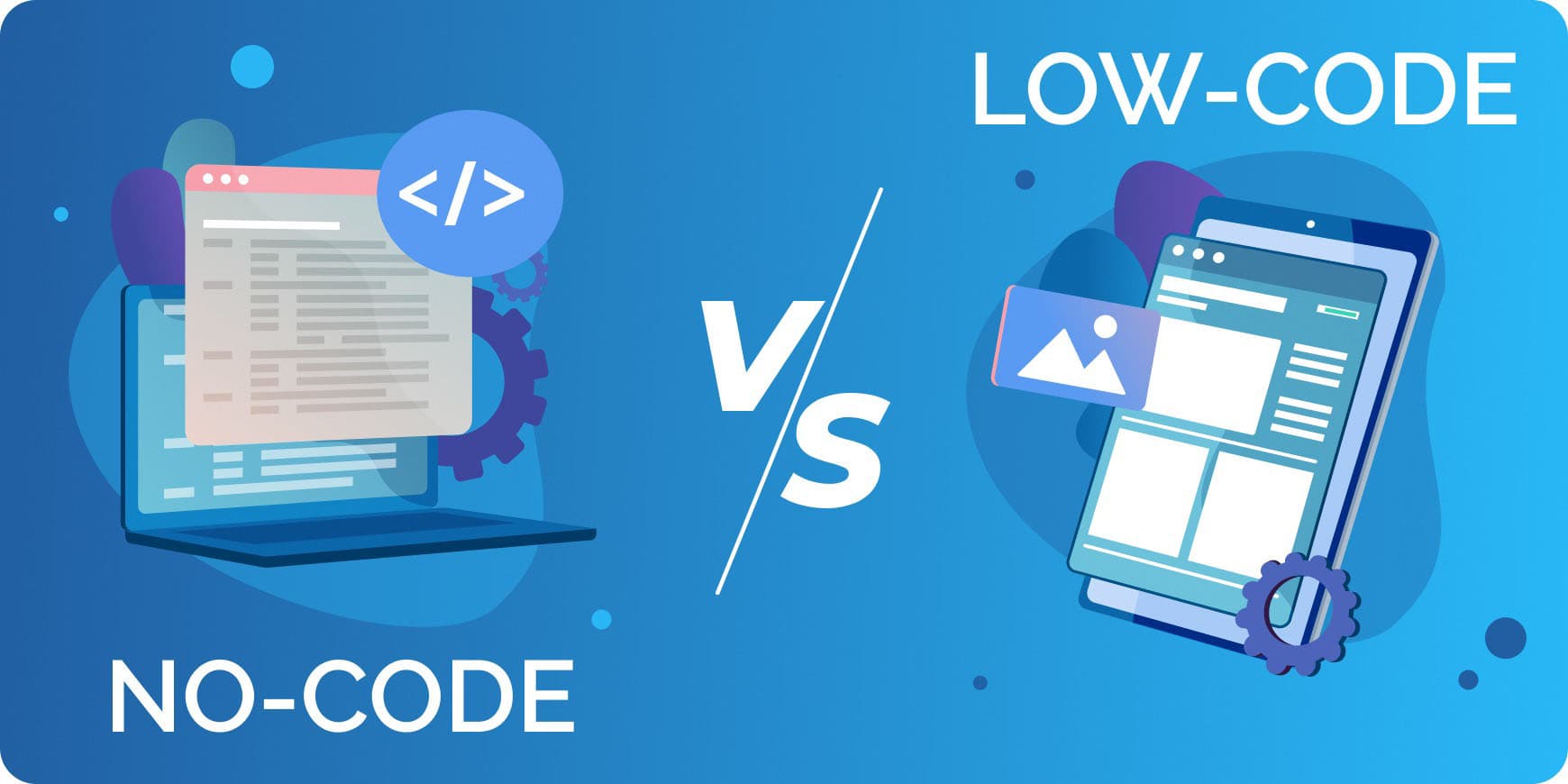
Currently, the application of AI in business activities from designing web services, customer-facing applications to marketing and sales campaigns,... is very popular. However, the barrier to entry in this technology field has never been easy. Especially in terms of training knowledge and understanding of artificial intelligence because only when understood can it be applied smoothly and limit errors. In today's article we will learn together about AI Low-code and AI No-code? Then let's analyze some typical examples, let's start now!

Distinguish between AI Lowcode and AI Nocode
Distinguish between AI Low-code and AI No-code
AI is truly useful for anyone, in any job. From doctors, lawyers, teachers to marketers and project managers,... However, many of these people are good at their profession, but not everyone has the necessary skills and techniques to Write code or have free time to learn them to apply in your career. Perhaps this is part of the reason the terms Low-code and No-code were born.

What is low-code?
What is low-code?
Simply put, Low-code is a platform that provides pre-designed components, imagined as Lego pieces that we just need to assemble. It does not require an in-depth understanding of programming code but still ensures application creation quickly, accurately and efficiently.
However, Low-code AI software often still requires a certain understanding of programming. Thus, to develop Low-code, users who create applications also need to have some experience in writing code. This is also the important difference that helps us distinguish Low-code and No-code.
Advantages:
- Flexible use
- Intuitive for anyone with a basic understanding of programming
- Ability of extension
- Control and functionality
- Suitable for developers, small to large businesses with limited time, business consultants, and small data engineering teams
Disadvantages:
- Requires some knowledge of programming languages
- More complicated than No-code
- Employees need to be trained to use the platform

What is no-code?
What is no-code?
Completely simpler than Low-code, No-code is AI software that allows users to create applications or use them with absolutely no programming knowledge. No-code platforms will often have simplified logic and fully programmed processes to make the application accessible to anyone.
A special point is that users can also use No-code to create many applications like Low-code. Thanks to that, many small and medium-sized businesses often save a certain amount of costs when using AI No-code.
Advantages:
- Anyone can use it easily
- No training fees for new employees on the platform
- The interface is greatly simplified
- Suitable for businesses without a data engineering team, small and medium enterprises.
Disadvantages:
- Limited functionality
- Primarily or solely for business purposes

Amazon SageMaker
5 typical examples about AI Low-code and No-code
Below are 5 typical AI tools on the market that are of interest to users. Some of these are purely designed for people with no programming experience, and some are useful for people who already have the basic foundation to be able to operate and apply them.
Amazon SageMaker
As one of the giants in the market, Amazon brings consumers an application called SageMaker with the desire to allow people new experiences about AI. It's quite easy to get started using SageMaker Jumpstart because users have a wide choice of templates for the most popular types of ML applications (ML Apps) today.
akkio
Next comes akkio - an AI-powered platform that promises to let you start launching your business ventures without any coding or data analysis skills. It's also a platform that boasts a robust set of integrations, including marketing tools like Hubspot, Salesforce, or industry-standard data platforms like Snowflake.
Apple CreateML
Coming to giant Apple, we have Apple CreateML which provides simple functionality to help create iOS applications easily and effectively. Data can be collected using iPhone cameras and microphones,... then proposed, classified, image recognized and text processed in a simple and fast way.
DataRobot
DataRobot is a cloud-based platform that provides tools to automate data preparation and build and deploy algorithms. It can be applied across multiple industries, from banking to retail, healthcare, manufacturing and many other fields.
Google AutoML
Google AutoML is Google's first codeless AI solution but requires users to have some understanding of ML (an artificial intelligence method). We can start with its simple graphical interface and natural language processing capabilities. Of course everything operates in Google Cloud so it will be familiar to anyone who has been in the habit of using Google features up to now.